NEWS
organic food Organic sales worth €2.1 billion in modern organised retail Nielsen data presented at the Assobio conference at Marca by BolognaFiere Italy is the fourth-largest market among the major European countries, with strong performance in the South (+8.7%) and Centre (+5.6%) Bologna, January 2024 – Between market data and communication strategies,…
organic food
Organic sales worth €2.1 billion in modern organised retail
Nielsen data presented at the Assobio conference at Marca by BolognaFiere
Italy is the fourth-largest market among the major European countries, with strong performance in the South (+8.7%) and Centre (+5.6%)
Bologna, January 2024 – Between market data and communication strategies, supply-chain synergies and ethical principles such as fair work, human health and the health of the environment: the ‘organic’ universe moves from large-scale retail to Marca by BolognaFiere, on the occasion of the Assobio conference on “Italy today and tomorrow: the social and economic role of organic food in modern retail”, held during the trade fair dedicated to private labels and modern retail (Dmo).
Sales of organic products in large-scale retail represent a turnover of €2.1 billion in 2023, equal to 2.9% of total food sales in the channel. The performance of organic (+4.7% in value and -0.3% in volume) fluctuates more moderately than that of the food sector as a whole (+8.7% in value and -1.2% in volume). The Italian origin (34.5%) and nutritional quality (23.5%) of organic products are the biggest draws for purchasing this category of food in large-scale retail.
These are just some of the figures highlighted by the Nielsen research, which provides a snapshot of the category in Italian and foreign large-scale retail (presented by Nicola De Carne, retail customer success leader). With these numbers, Italy is, by size, the fourth-largest organic market among the major countries in Europe after Germany (€7.8 bn), France (€5.7 bn) and the United Kingdom (€2.3 bn), in the large-scale retail channel. It is third, however, for value trend, after Germany (+7.8%) and Spain (+6.7%).
At the level of macro-regions, the trend grows more sharply in the South (+8.7%) and Centre (+5.6%), but the highest share of ‘organic’ in total food spending is found in Triveneto-Emilia Romagna (3.4%). Among the points of sale, ‘organic’ obtains the largest share of total food sales (3.4%), amounting to €593 million (+4.9%) for purchases made in hypermarkets, but the highest takings in absolute value, €938 million (+5.1%), come from the supermarket channel.
And which foods do Italians choose when they stand in front of the ‘organic’ shelf? Eggs, rice cakes and jams are on the podium of the best-selling organic products by value. Rounding out the 2023 “top ten” of the ‘organic’ basket are the good performances of fresh milk and UHT milk substitutes, extra virgin olive oil, breakfast cereals, sweet spreads, whole yoghurt, wholewheat pasta or pasta made with spelt, kamut or legume flours, and vegetables (ready-to-eat fresh-cut).
The Nomisma data, presented by Silvia Zucconi, head of market intelligence, described “The new relationship between consumers and modern retail”. On the one hand, consumers buy organic products because they are safer for health (27%) and environmentally friendly (23%), but on the other, 40% admit to being confused about interpreting and recognising labels and the sustainability characteristics claimed. It should be remembered that organic sales in Italy have a total value of €5.4 billion (+9%, year ending July 2023) and exports are worth €3.6 billion (+8%).
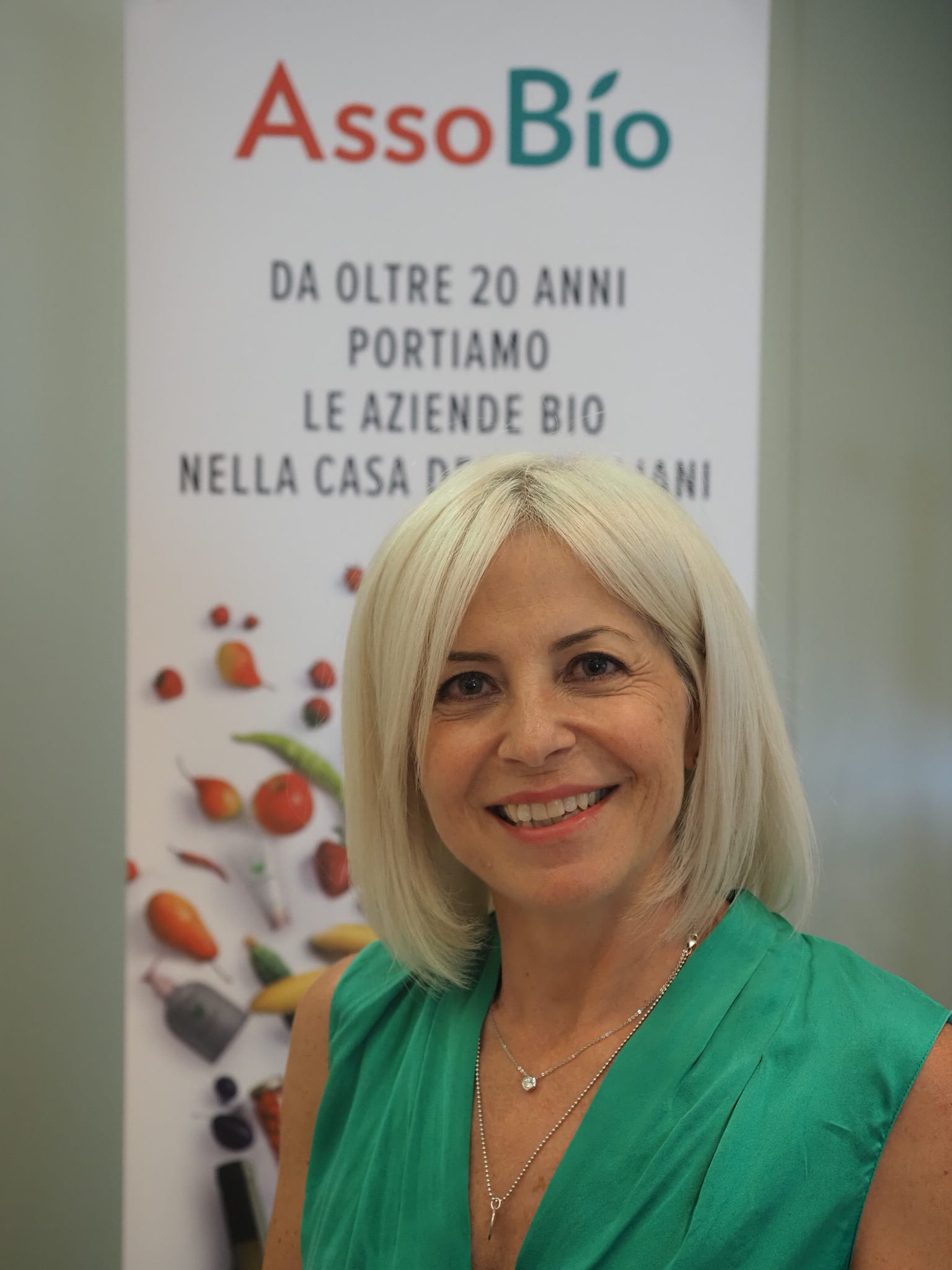
“Italy is a leading country in the production and export of ‘organic’ in the world and sees constant growth in the agricultural area farmed organically, now 18%, thanks to farmers who give up pesticides and chemical fertilisers for the benefit of the environment – says Nicoletta Maffini, president of Assobio -. On the other side of the shelf, 88% of Italians are grappling with strategies to save on food shopping because of a general rise in costs and a reduction in purchasing power. This penalises premium products, like organic ones: the fact that sales of organic products in large-scale retail are stuck at 3% is a figure that does not satisfy us and we hope to reach at least 10% as soon as possible. To do this, trade associations need to work together with each other, but also with politicians and with the retailers themselves, to support supply-chain projects and a fair price. Assobio, for its part, is carrying out clear communication campaigns and is committed to a traceability platform for organic products. On the economic front, we recall our request to politicians for a reduction in the VAT rate on fresh products and for a tax credit on certification costs for companies, a burden that is reflected in the final price of the products. There is still a long way to go and everyone's support is needed“.
Not only market values, but also moral and ethical ones: the debate among the leading players in industry and retail made it possible to discuss concrete cases and virtuous organic and sustainable agri-food supply-chain projects. The virtuous synergies with the PDO and PGI food specialities of the local area, fair price policies from producer to consumer, the communication of the value of organic food and research, the role of private labels and business ethics are the topics developed by the participants in the two round tables.
“The retailer's organic brand as a growth lever. The point of view of the member retailers”, saw the participation of Massimo Silvestrini (head of Organic Development, Carrefour Italia), Carmen Quatrale (brand manager Vivi Verde, Coop Italia), Roberto Romboli (head of private-label products, DIT distribuzione italiana), Pietro Poltronieri (director of private-label products, CRAI).
“The social value of organic in modern retail: supply-chain projects and fair price”, featured contributions from Mattia Noberasco (CEO of Noberasco), Leandro Cariolo (marketing director of CoproB Italia Zuccheri), Elena Arpegaro (head of marketing and communication, Gruppo Germinal), Stefano De Donatis (head of Italy sales, Conapi) and Sergio Moretti (sales director of Gino Girolomoni Cooperativa Agricola).
Organised by AssoBio, the national association of organic product processing and distribution companies, the conference was held in collaboration with Federbio as part of the Being Organic in Eu project co-funded by the European Union under Reg. EU no. 1144/2014).
The event was held at the Gallery Hall, pavilion 21-22.
press release by Trefoloni e Associati