NEWS
Chianti, the Classico On 24 September the Consortium celebrates 300 years of the wine A story that intertwines with that of Italy. Grand Duke Cosimo III de’ Medici and the “Iron Baron” Bettino Ricasoli. Not everyone can boast noble “fathers” of such weight as Chianti can, the Italian wine that for…
Chianti, the Classico
On 24 September the Consortium celebrates 300 years of the wine A story that intertwines with that of Italy.
Grand Duke Cosimo III de’ Medici and the “Iron Baron” Bettino Ricasoli. Not everyone can boast noble “fathers” of such weight as Chianti can, the Italian wine that for years was the most famous and best known throughout the world. Helped also by that flask that became its symbol before being abandoned by most producers. 2016, however, will be a special milestone in its history because Chianti celebrates its 300 years. An anniversary that will be celebrated in Florence on 24 September, the day on which, in 1796, the Grand Duke of Tuscany decided to delimit by edict, for the first time in history, certain territories particularly suited to the production of high-quality wines. An absolutely exceptional fact, given that until then nobody had thought of it, and above all an intuition that anticipated by almost three centuries what would later become the Controlled Designations of Origin. “Three hundred years after that edict – says Giuseppe Liberatore, director of the Consortium – the Chianti Classico territory can rightly be described as a true production district, one of the few in Italy to boast a centuries-old history. Today more than ever, in the wake of the farsightedness of Grand Duke Cosimo III, it is our task to safeguard, protect and promote throughout the world a unique product, synonymous with absolute quality.”
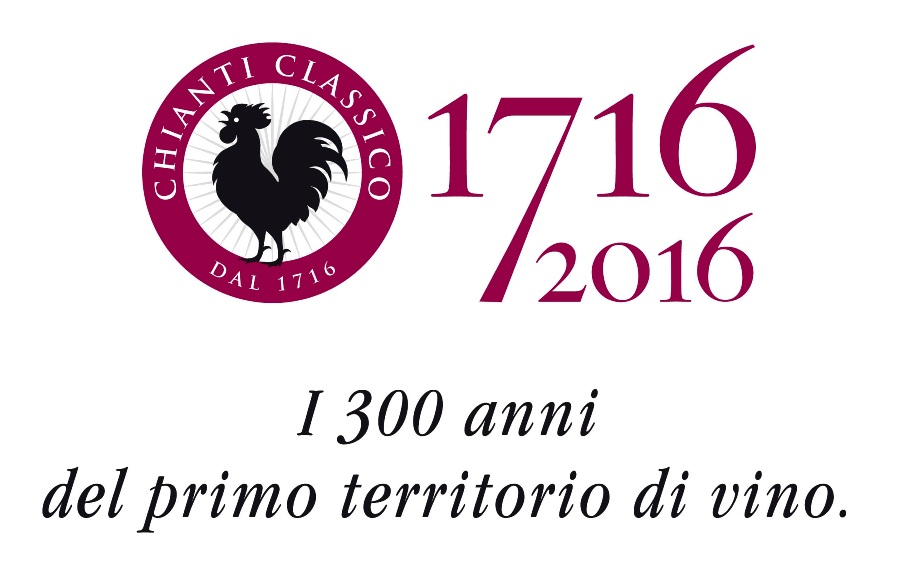
So on 24 September the Consortium has organised a series of celebrations throughout the day that will conclude with a ceremony at Palazzo Vecchio, the seat of the City Council. But the celebration will continue until the end of 2016 with events and happenings that will carry as their emblem a logo combining the two dates of the three hundred years.
And yet, despite so much history and “farsightedness”, Chianti has also had less than glorious moments. This happened in the period from the 1920s to the end of the 1970s, when the name Chianti identified a vast area that included practically all the vineyards of central Tuscany. There, an easy, undemanding wine of no great depth was produced. What had happened was that the rough Sangiovese had been “softened” with Trebbiano and Malvasia grapes. A choice that followed the “recipe” established by Bettino Ricasoli in the late 1800s, but stretching it somewhat. The Iron Baron had in fact established that, besides Sangiovese, Malvasia could also be used. But he had never dreamed of including Trebbiano as well, which was instead used generously in the blend. The turning point came in the 1980s when a group of Classico producers decided to join forces and to focus decisively on Sangiovese and, consequently, on a more “complicated” but certainly longer-lived, more structured and more interesting wine. In 1996 the recognition everyone had been waiting for also arrived: Chianti Classico became a DOCG and was set apart from the other production areas of the same wine. Today the winegrowers of the Consortium use a pure Sangiovese that yields wines of great quality. To the delight of the two great noble Fathers.