NEWS
Castello Conti Guidi, Poppi (Arezzo) – 1 and 2 June 2024. Neuroscience today in the challenge between quantum models and AI. Multidisciplinary dialogues on "The Brain and Information Technology". The event, conceived by Alessandro Rossi, professor of Neurology at the University of Siena, brings Neuroscience back to the centre of public debate, with a major discussion among experts: Neuroscientists,…
Castello Conti Guidi, Poppi (Arezzo) – 1 and 2 June 2024
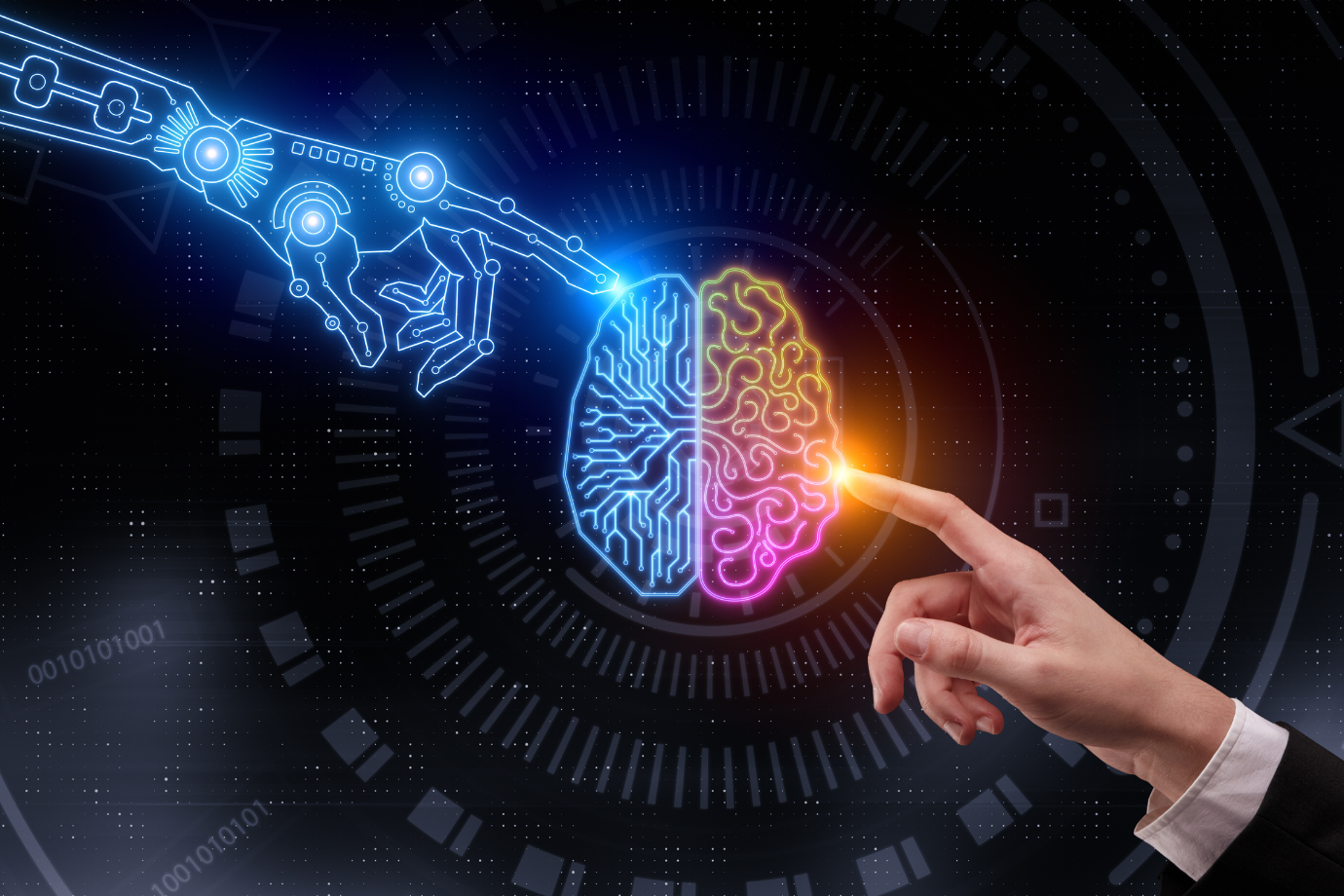
Neuroscience today in the challenge between quantum models and AI
Multidisciplinary dialogues on "The Brain and Information Technology"
The event, conceived by Alessandro Rossi, professor of Neurology at the University of Siena, brings Neuroscience back to the centre of public debate, with a major discussion among experts
Neuroscientists, philosophers, ethical theorists, physicists, engineers, and experts in educational and communication technologies meet on the basis of scientific findings and hypotheses
The nature, complexity and functions of the mind are observed in light of the greatest challenges: understanding the quantum processes taking place at the neuronal level and the consequences of the advent of generative AI on human thought
Arezzo, 30 May 2024 – An event of a popular-science nature designed to give Neuroscience a central position on the agenda of contemporary society, to update the public on research progress and to promote a balanced and constructive dialogue between scientific, technological and humanistic culture. With these aims the Neuroscience Festival (Festival delle Neuroscienze) makes its debut, taking place on 1 and 2 June in the striking setting of the Guidi Castle in Poppi (Arezzo), with the support of Clinica di Riabilitazione Toscana Spa (CRT) of Valdarno and Fondazione Gianfranco Salvini, and under the patronage of the Tuscany Region.
The event was conceived on the initiative of Alessandro Rossi, professor of Human Physiology and Neurology at the University of Siena. The first edition, entitled "The Brain and Information Technology", will be dedicated to "Human intelligence and artificial intelligence. Neuroscience, Physics, Technology and Philosophy compared". The Festival will be structured in complementary dialogues that will explore the value of emerging technologies and the complexity and richness of human thought, in order to build a solid cultural bridge between the different disciplines that study the brain, human behaviour, its values and its relationship with reality.
The debate will be fuelled by interdisciplinary discussion among neuroscientists, philosophers, ethical theorists, physicists, electronic engineers and experts in educational and communication technologies, within a dialogue based not on a comparison of opinions but of scientific findings and hypotheses. Moderation will be entrusted to Luigi Ripamonti, head of Health at Corriere della Sera, media partner of the event.
The Festival will address the new challenges of Neuroscience which, since 2010 with the advent of the global "Human Connectome" project, have seen an intense effort to define the structural and functional architecture of the central nervous system and to explain the nature of our mental functions, increasingly leading to the observation of quantum processes operating in the "depths" of neurons. The other thematic core will concern the advent of applications based on generative Artificial Intelligence, a technology that increasingly appears to be a new guest that will not leave our homes, let alone our thoughts.
More specifically, the topics covered in the dialogues will be: The contemporary challenges of neuroscience to the complexity of the brain; What the brain does when we do nothing; Ethics and cybersecurity; Generative artificial intelligence; The metamorphoses of communication; Education and neuroscience: non-binary visions; The humanity of remembering: differences and analogies with artificial memory; Time that cannot be reduced to space; Can creative thinking change reality?; The brain and quantum mechanics: two monuments compared; Consciousness inhabits the physical world; The dangers of abdicating to statistical oracles.
In short, the Neuroscience Festival represents a bastion of science in contemporary debate, aimed at bringing attention back to humankind and restoring artificial intelligence to the rank of "artificial efficiency", avoiding abdication to statistical oracles. A cultural balance that introduces an alphabet of distinctions within everyone's reach, so that memory is not confused with the simulation of memory, thought with the simulation of critical thinking, consciousness with the simulation of consciousness.
Only a life of experiences, relationships and study can develop the growth of the individual and their capacity to think of creative solutions, to learn and memorise, to use information of every kind flexibly, to use intuition and feelings, to think symbolically and understand, and to associate with emotions and spirituality: in a word, everything for which it is worth living and calling oneself "human".
"Intelligence and creativity are inseparable even though they are not the same thing. We have all known people who are apparently brilliant but arid. Creativity requires the ability to embrace the future with the challenges and opportunities that come with it", comments Rossi.
The other speakers already confirmed for the Neuroscience Festival are: Sergio Bertolucci (Prof. of Theoretical Physics, CERN, Geneva); Paolo Benanti (Prof. of Ethics of Technology, Pontifical Gregorian University of Rome and Seattle University, USA); Maurizio Corbetta (Prof. of Neuroscience, University of Padua); Matteo Lucchetti (director of Cyber 4.0 Competence Centre, EU); Emanuela Scribano (Prof. of History of Philosophy, Ca' Foscari University of Venice); Simone Rossi (Prof. of Neuroscience, University of Siena); Riccardo Manzotti (Prof. of Theoretical Philosophy, IULM University of Milan); Loretta Fabbri (Prof. of Educational Sciences, University of Siena); Gavina Luigia Giuseppina Cherchi (Prof. of Human and Educational Sciences, University of Sassari); Marzia Sandroni (Prof. of Communication Sciences, LUISS Business School in Rome).
The Neuroscience Festival (fesivaldelleneuroscienze.com) is held with the additional free patronage of the Municipality of Poppi, Azienda Usl Toscana nord ovest, Arezzo-Siena Chamber of Commerce, University of Siena, Confindustria Toscana Sud and in collaboration with Trefoloni e Associati and Inedita comunicazione sociale.
It will also be possible to take part in the Festival remotely, by connecting to the YouTube channel of Clinica di Riabilitazione Toscana or the Trefoloni e Associati YouTube channel and on www.corriere.it/tv
To view the programme:
https://www.festivaldelleneuroscienze.com/
press release by Trefoloni e Associati