NEWS
Developed by Ales Tech, a spin-off company of the Scuola Superiore Sant'Anna in Pisa, and by Girotto Brevetti. The promoters: "We want to democratise magnetic levitation". Full-scale prototype before December 2017 Rail transport heading for the scrapping of the wheel: by 2020 carriages will remain suspended on a magnetic "cushion" thanks to…
 Developed by Ales Tech, a spin-off company of the Scuola Superiore Sant’Anna in Pisa, and by Girotto Brevetti. The promoters: “We want to democratise magnetic levitation”. Full-scale prototype before December 2017
Rail transport heading for the scrapping of the wheel: by 2020 carriages will remain suspended on a magnetic “cushion” thanks to the Italian IronLev technology
Respect for the environment, safety and efficiency with extremely low friction: 10 tonnes move with the force needed to shift a 10-kilo backpack
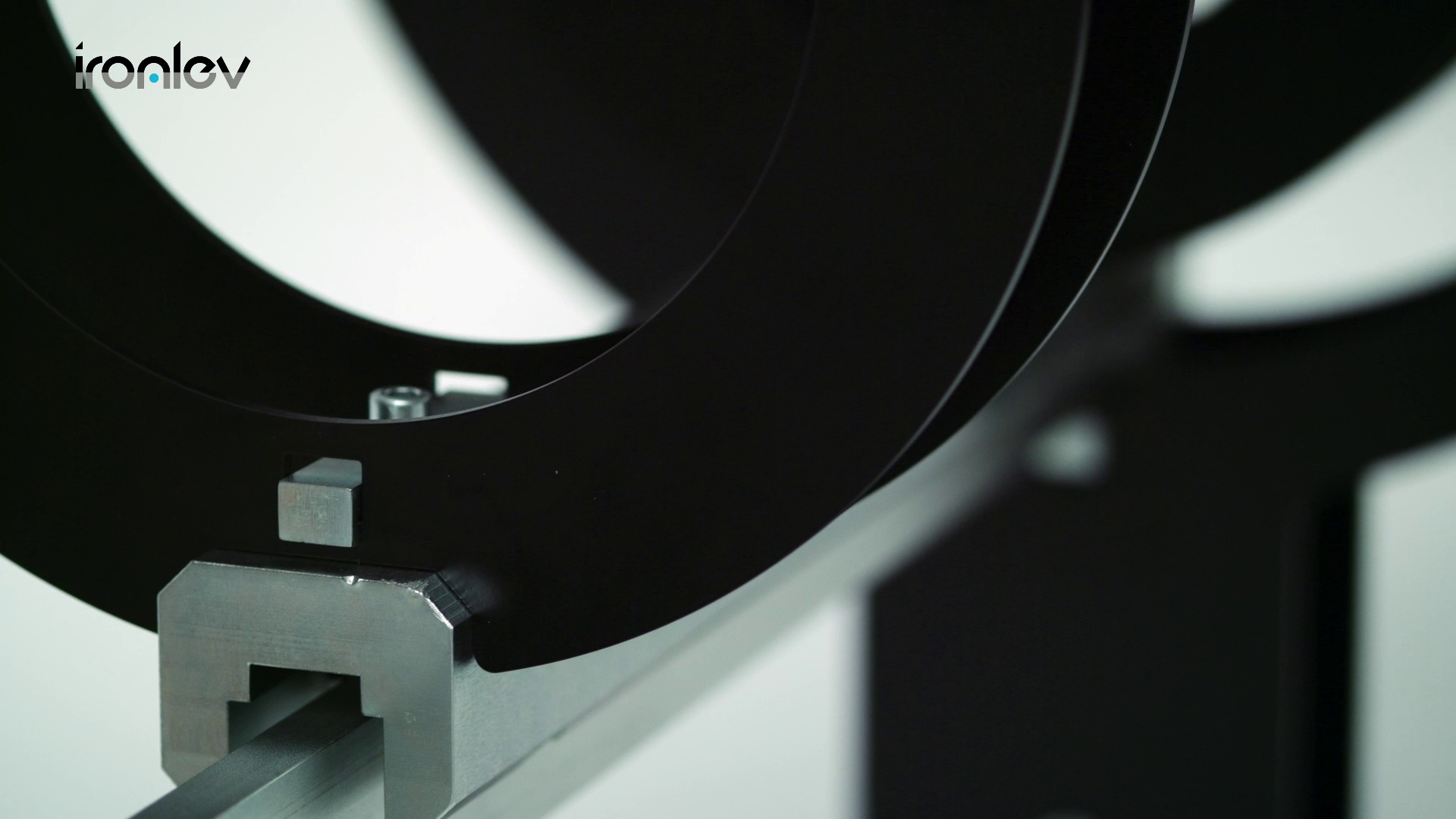
ROME, 19 January. For now it is a simple yet revolutionary technology, with the ambition of doing away with the wheel for certain forms of public transport. By 2020 it is set to change the appearance of all vehicles that run on rails (over short as well as medium and long distances, such as metros, trams and trains, including high-speed ones) and above all the technology that allows them to move, remaining literally suspended a few centimetres above the tracks. Ironlev is the system developed by Ales Tech, a spin-off company of the Scuola Superiore Sant’Anna in Pisa, in collaboration with Girotto Brevetti, an Italian company based in Spresiano (Treviso), to help make public transport more efficient, reducing operating costs and increasing environmental compatibility. IronLev is an entirely Italian technology based on steel tracks, very similar to those of rail and tram networks, to which the carriages are “magnetically” attached. They can run thanks to a special flotation system, not powered by electric current, and above all without touching the rails and therefore without causing wear.
It is no coincidence that this technology nods to Hyperloop, the revolutionary transport system proposed by Elon Musk and under development, to whose creation the spin-off company of the Scuola Superiore Sant’Anna, Ales Tech, has long been contributing. Even before it was born as a spin-off company, its founders had been selected to take part in the competition to develop Hyperloop’s “capsules”, the “pods”, focusing on the “bogies” and the suspension system. Ales Tech then became a company and official supplier of suspension systems for the vehicles of finalist teams in the “SpaceX Hyperloop Pod Competition”. The vehicles with bogies made in Italy will be in action on 29 January in California, on their way to the final stage of the competition.
 With IronLev, Ales Tech is preparing to take a further step towards the mobility of the future. Unlike similar technologies already in use, for example, on ultra-fast trains in Japan, which prove very costly and technically complex, IronLev allows passengers and goods to be transported in a way its creators describe as “fast and safe”, after generating a significant reduction in the costs of building and operating railway networks. To ensure the levitation of the vehicles, and therefore their movement, IronLev does not consume energy but exploits certain physical properties of matter. The carriages run on the tracks thanks to a special flotation system that is not powered by electric current and, above all, does not come into physical contact with the rails.
This system, defined as “passive magnetic levitation”, aims to make mass public transport more efficient. IronLev’s fields of application are not limited to transport but can be used wherever movement is needed, always without the wheel. Roller coasters, camera dollies for film or television shoots, lifts, automated parking systems and anti-seismic systems are sectors potentially interested in this new Italian technology. According to its creators, IronLev can also lend itself to possible developments in the field of industrial automation.
The technology that does without the wheel is rapidly heading towards the market and real-world uses. A demonstration system has already been built and tested in the laboratory (it can be seen in action at www.ironlev.com), but Ales Tech is already working to build a full-scale prototype by December 2017. The creators of IronLev belong to a multidisciplinary team made up of engineers and intellectual property and innovation experts from two Italian companies. Ales Tech is the spin-off of the Scuola Superiore Sant’Anna, founded in 2016 and specialising in systems for dynamics control and vibration reduction. Girotto Brevetti has developed and marketed innovations in the field of mechanics, working with companies such as Pirelli and Technogym.
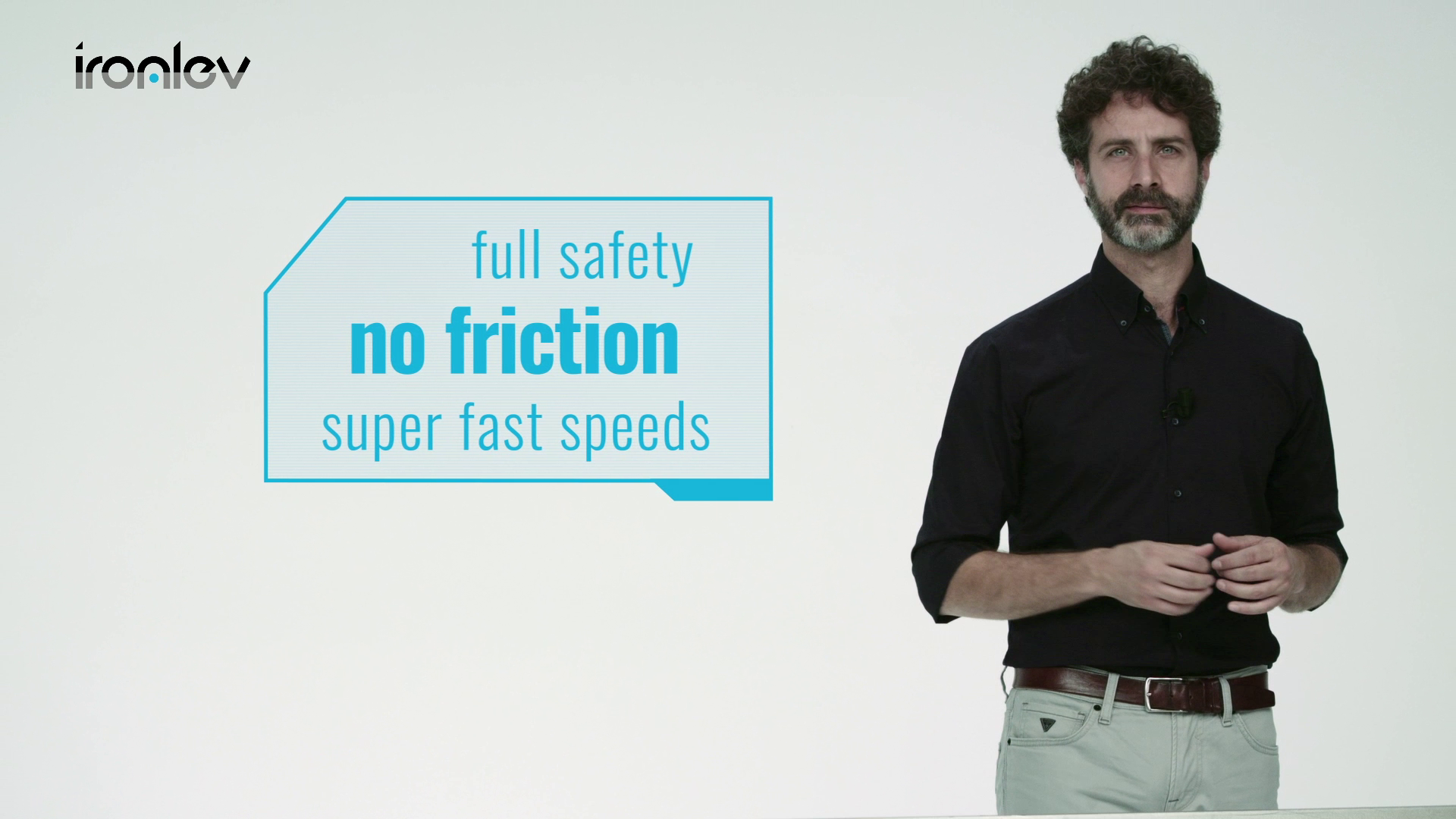
“With IronLev,” explains Luca Cesaretti, president of Ales Tech, “we want to democratise magnetic levitation. Thanks to the characteristics of our technology and its very low friction, which remains constant even at high speeds, we can move a 10-tonne carriage with the same force needed to lift a 10-kilogram backpack. We aim to cut the cost of managing the infrastructure by a significant order of magnitude, thanks to the absence of contact between the flotation system and the rails and to considerable savings in electricity. Now,” continues Luca Cesaretti, “we are defining the steps that will take IronLev from the laboratory to real-world use. We are getting in touch with several companies interested in joining us in development. It is realistic to think that, if all goes well, we could see the system in operation in our cities as early as 2020”.
https://www.trefolonieassociati.com/wp-content/uploads/2017/01/IRONLEV-MEDIA-CLIP.mp4