NEWS
Italian cuisine university The rising costs of the glass industry and the need for sustainability raise the question Inaugural lecture on food design with lecturer Angelo Minisci and director Guido Mori The fifth year of activity begins for the only culinary school with academic standing in Italy Florence, 19 October 2023 – Uncorking a vintage bottle,…
Italian cuisine university
The rising costs of the glass industry and the need for sustainability raise the question
Inaugural lecture on food design with lecturer Angelo Minisci and director Guido Mori
The fifth year of activity begins for the only culinary school with academic standing in Italy
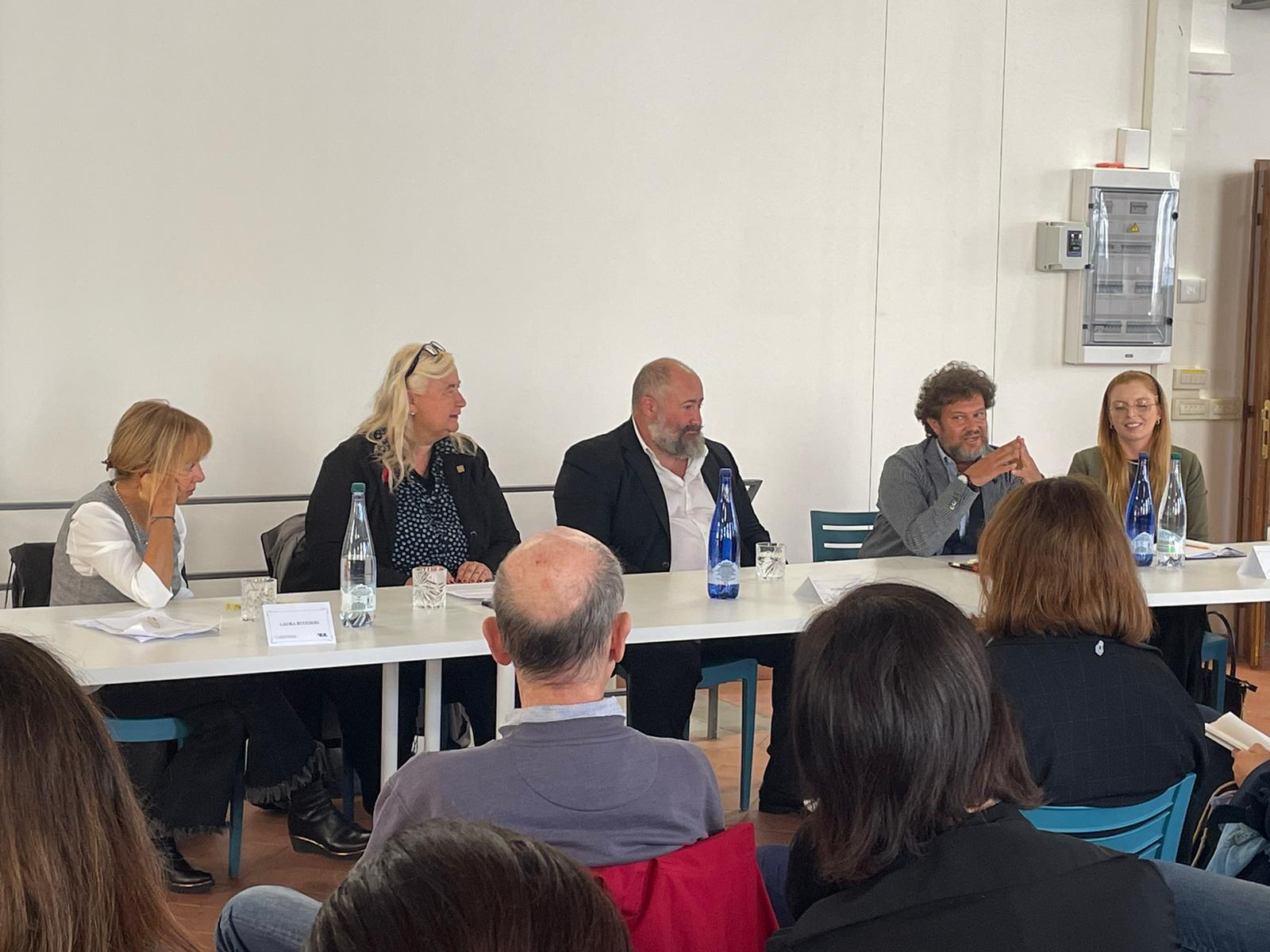
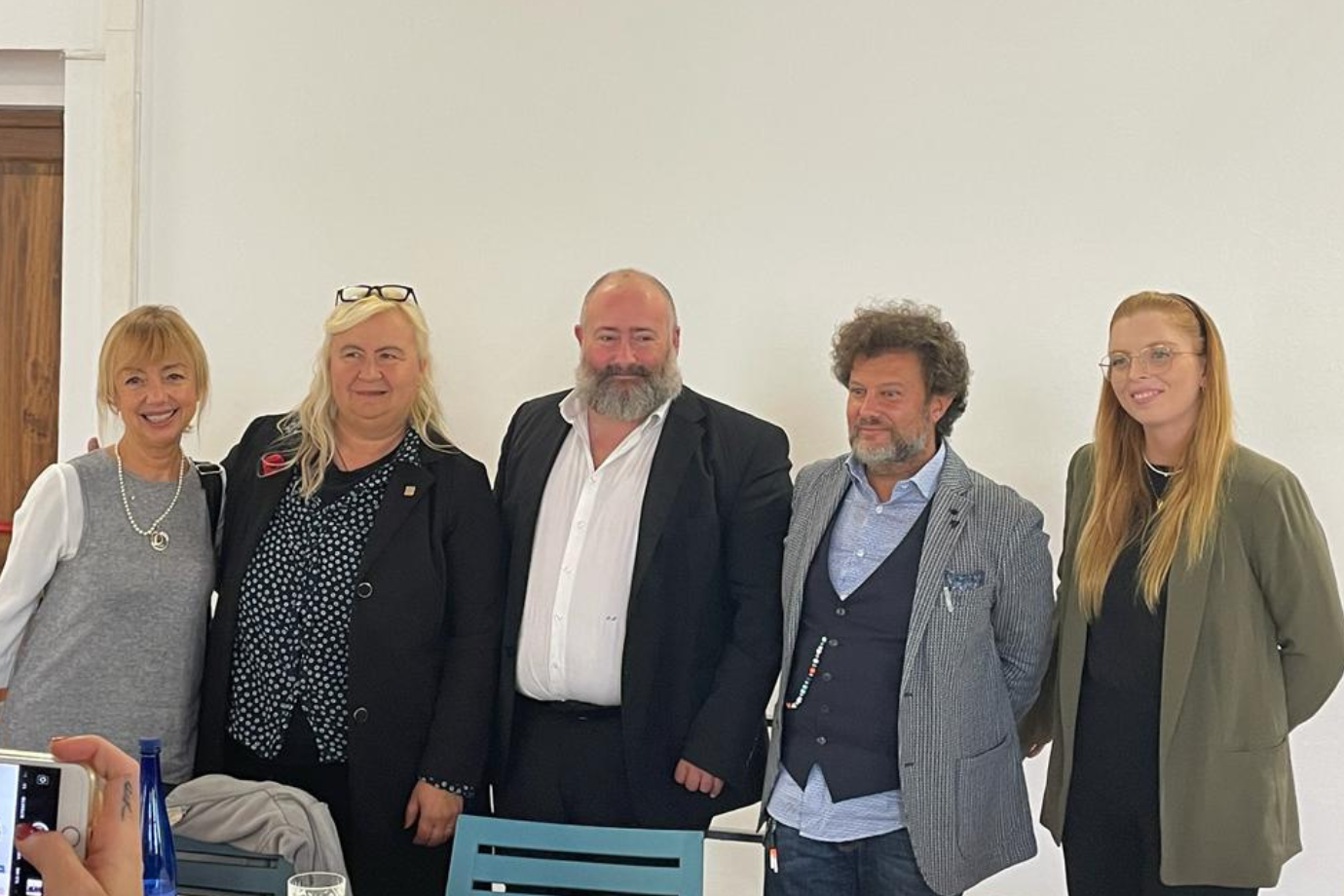
Florence, 19 October 2023 – Uncorking a vintage bottle, pouring into a crystal glass, toasting with fellow diners and drinking the prized “nectar of the gods”: familiar and oft-repeated as it is, the act of pouring and drinking wine is a true ritual born with the history of mankind, and today, in the age of environmental and economic sustainability, it is undergoing a radical rethink in consumption habits. This was the theme of the lecture that inaugurated the 2023/24 academic year of the Università della Cucina Italiana of Florence on “Bottle and glass: archaeology or the future?”. The debate was attended by Guido Mori, academic director, Angelo Minisci, lecturer in food design, Laura Ruggieri, public relations at the Carpineto wine estate in Montepulciano (Siena), Julian Biondi, lecturer and founder of FermenthinkS, and Sofia Taiti, web communications manager at Collevilca.
Artisan winemakers and others are increasingly looking for innovative, “green” solutions for the transport, storage and serving of wines and sparkling wines, from reducing the thickness of bottle glass to using alternative materials such as plastic or steel, and even recycled cardboard. In the background lies the change in the prices charged by the industry: the bill for the cost of glass for the wine sector rose by an average of around 70% in just 12 months in 2022 (Unione Italiana Vini data). Together with other inflationary factors, the end consumer saw average shelf prices rise by 8.7%, ending up buying less wine (-6.1% by volume) in the first quarter of 2023 (Ismea-Uiv Observatory data).
Will flasks, amphorae and magnum bottles one day give way to cans, “bag in box” and draught carafes? “Research into alternative materials does not imply just new packaging but an entirely different wine experience – explains Minisci –. Glass containers and glasses, or even better crystal ones, offer specific communicative qualities, both functional and perceptual, towards the table, the user and the quality of the wine served. Rising raw material costs, foreign competition and ever more limited purchasing power call the future of glass on the table into question. The food design course tackles this subject by highlighting its added value at a semiotic level, while also looking at the sustainability of production, of communication and at the signals coming from the market.”
“Since Carpineto was founded in 1967, as far as bottles are concerned our greatest effort has been focused on lightening the glass and the packaging which, for a company with a significant share of exports, have a substantial impact on the environment.
In 1968, the bottles of the first harvest weighed 800 grams, today less than half of that. For the Dogajolo line, a very contemporary wine in taste and much loved also for its bottles, we have in fact come down to 360 grams” – says Antonio Mario Zaccheo, co-founder with Giovanni Carlo Sacchet of Carpineto, an established name in great reds with five zero-emission estates in the historic denominations of Tuscany.
“For us, who produce many long-lived wines, which are often aged in bottle, glass remains the only material that guarantees quality over time.
Bag-in-box and PET bottles and the like have the problem of a shelf life that is too short, nine months at most, which is not suitable for a company that exports heavily, including to distant countries.
However, I do not rule out that in future, for less structured, lighter wines with a lower alcohol content, in line with a taste trend that calls for less alcoholic wines, we could also consider bag-in-box formats, which the Nordic market seems ready to embrace,” says Caterina Sacchet, of Carpineto’s younger generation and also an oenologist.
The Università della Cucina Italiana confirms for the fifth year running its inaugural tradition with an event open to the public (last year held on the “Cuisine of the future”). Created to offer training courses in food and wine at academic level, the school provides courses with legal value certified by its training partner Ateneo IUL (Università Telematica degli Studi), recognised by the Ministry of Universities and Research.
The offer is divided between first-level Master’s programmes and Advanced training courses, starting this month. The former are open to participants holding a three-year degree, while the latter require a five-year secondary school diploma (all information at universitacucinaitaliana.it).
“Young chefs, maîtres d’hôtel and sommeliers must find their bearings in a constantly evolving world, where sustainability and transparency in the food and wine supply chain increasingly go hand in hand with consumers’ search for product and experience quality – stresses Mori –. Until 10 years ago nobody would have questioned the glass-wine pairing, a true totem of traditional wine culture, but attention to energy consumption, environmental impact, economic accessibility and research into alternative raw materials have prompted a new reflection on the practical implications of our work. The Università della Cucina Italiana offers its students a broad academic-level culture, of which food design is an important component; at the forefront of the current debate, our school is the right place for those who want to become a well-prepared and aware professional of tomorrow.”
press release by Trefoloni e Associati